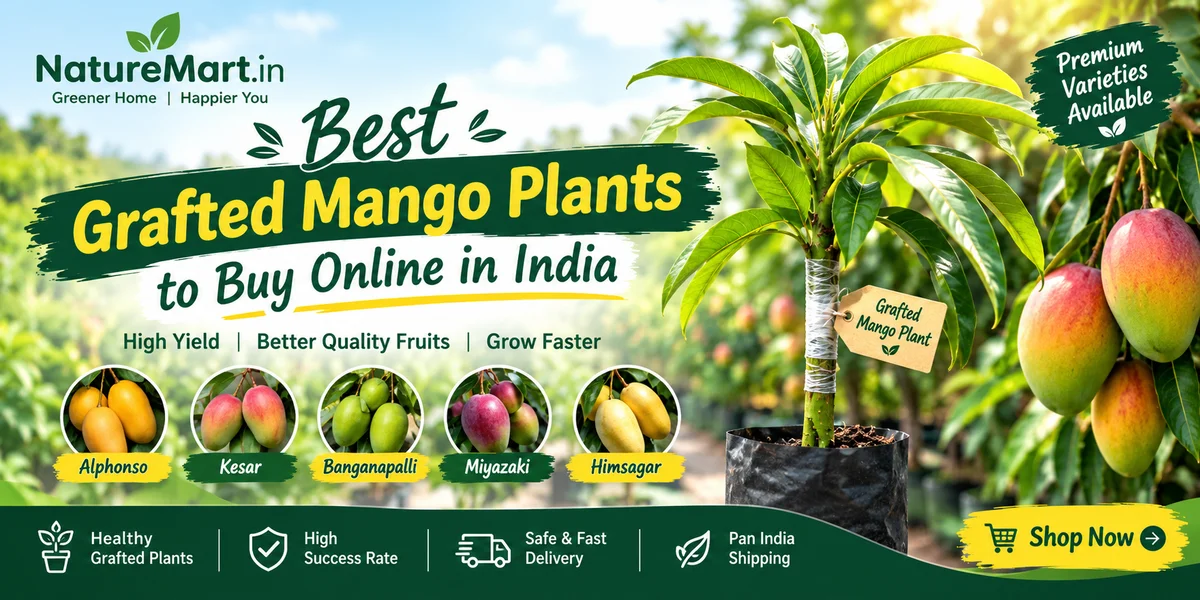
Best Grafted Mango Plants to Buy Online in India
Best Grafted Mango Plants to Buy Online in India
Mango is one of the most loved fruits in India, known for its delicious taste, sweet aroma and rich variety of flavours. If you dream of harvesting fresh mangoes from your own garden, terrace or backyard, growing a grafted mango plant can be an excellent choice.
Today, many gardening enthusiasts prefer grafted mango plants because they can produce fruit earlier than seed-grown trees and retain the characteristics of the selected variety, provided the plant is properly propagated and cared for.
From popular Indian mango varieties to premium and specialty selections, there are many options available for home gardeners. But which grafted mango plant should you choose? Which variety is suitable for pots, and how should you care for your plant?
In this complete guide, Naturemart.in explains the best grafted mango plants to consider buying online in India, their key features, growing requirements and essential care tips.
What Is a Grafted Mango Plant?
A grafted mango plant is produced by joining a selected mango variety, called the scion, with another mango plant that provides the root system, called the rootstock.
This propagation method helps growers reproduce the characteristics of a selected mango variety more consistently than growing plants from seeds.
Benefits of Grafted Mango Plants
Earlier fruiting potential: Grafted plants generally begin bearing earlier than seed-grown mango trees, although the timing varies by variety and growing conditions.
Known variety: You can select a mango variety based on its flavour, fruit characteristics and suitability for your region.
Consistent characteristics: Properly propagated grafted plants are more likely to retain the characteristics of their parent variety.
Suitable for home gardens: Many grafted mango plants can be grown in backyards and large containers, depending on the variety and available space.
More predictable growth: Choosing a healthy, correctly labelled grafted plant makes it easier to plan your home orchard.
Remember that grafting does not guarantee a particular fruiting date or harvest. Plant health, climate, sunlight, care and the quality of the graft all influence performance.
10 Best Grafted Mango Plants to Consider Buying Online in India
Here are ten popular mango varieties and specialty selections worth considering for your home garden. Availability and suitability may vary by nursery and region.
1. Kesar Mango Plant
Kesar is a well-known Indian mango variety valued for its attractive golden-yellow flesh, sweet flavour and pleasant aroma.
It is a good option for gardeners who want to grow a recognised mango variety at home.
Key features:
Popular Indian mango variety.
Sweet, aromatic fruit.
Suitable for home orchards in favourable climates.
Requires good sunlight and well-draining soil.
Best for: Gardeners looking for a popular mango variety with sweet, aromatic fruit.
2. Himsagar Mango Plant
Himsagar is a celebrated mango variety associated with West Bengal and neighbouring eastern Indian growing regions. It is appreciated for its sweet taste, smooth pulp and relatively low fibre content.
It can be an attractive choice for gardeners in suitable eastern Indian climates.
Key features:
Recognised eastern Indian mango variety.
Sweet pulp with a pleasant flavour.
Suitable for home orchards in compatible climates.
Benefits from a sunny location and healthy soil.
Best for: Gardeners who enjoy traditional eastern Indian mango varieties.
3. Miyazaki Mango Plant
Miyazaki mango is a specialty Japanese mango variety that has attracted attention for its distinctive reputation and premium positioning.
If you are interested in growing an unusual mango variety, it may be worth considering from a reliable nursery.
Key features:
Specialty Japanese mango variety.
Known internationally as a premium mango selection.
Requires a suitable climate and attentive care.
Needs adequate sunlight, drainage and space.
Best for: Collectors and gardening enthusiasts interested in specialty mango varieties.
Important: A plant advertised as Miyazaki should have reliable varietal identification. A premium name alone does not guarantee authentic genetics, fruit quality or performance in Indian conditions.
4. All Time Mango Plant
All Time Mango is a name used for mango plants marketed for extended or repeated fruiting. The actual fruiting behaviour depends on the specific cultivar and planting material supplied.
Before purchasing, check the seller's description and ask for clarification about the exact variety.
Key features:
Marketed as a specialty mango selection.
Potentially attractive to gardeners interested in distinctive fruiting characteristics.
Requires suitable climate and regular plant care.
Needs adequate sunlight and well-draining soil.
Best for: Buyers interested in specialty mango plants, provided the variety and its characteristics are verified.
5. Toledo Hybrid Mango Plant
Toledo Hybrid Mango is a specialty name used for selected mango planting material. Buyers should check the exact cultivar identity and the characteristics documented by the nursery before purchasing.
Choose a healthy grafted plant with a clearly identified variety and a sound graft union.
Key features:
Specialty mango selection.
Suitable for gardeners interested in exploring different mango varieties.
Requires good sunlight and proper drainage.
Benefits from careful watering during establishment.
Best for: Mango enthusiasts looking to expand their home orchard with specialty varieties.
6. Sindur Kouta Mango Plant
Sindur Kouta is another specialty mango name that may interest collectors and gardeners looking for less common planting material.
As regional names and nursery labels can vary, verify the plant's identity and expected fruit characteristics with the seller before ordering.
Key features:
Specialty mango selection.
An option for variety collectors.
Requires a sunny location and healthy soil.
Needs appropriate care during establishment.
Best for: Gardeners who want to explore specialty mango varieties.
7. Chiang Mai Mango Plant
Chiang Mai is a name associated with mango selections from Thailand. The precise variety should be confirmed with the seller because mango names may be used differently across nurseries.
When purchasing, ask about the plant's expected growth habit, fruit characteristics and suitability for your local climate.
Key features:
Specialty mango selection associated with Thailand.
Interesting option for mango collectors.
Requires a warm, sunny growing location.
Benefits from consistent care and good drainage.
Best for: Gardeners interested in specialty mango varieties from outside India.
8. Kohitur Mango Plant
Kohitur, also spelled Koh-i-Noor in some contexts, is associated with a premium traditional mango reputation. Because names and identities can be confused in the plant trade, choose a nursery that can substantiate the variety.
Key features:
Specialty traditional mango name.
May appeal to mango collectors.
Requires suitable regional growing conditions.
Benefits from a healthy root system and proper establishment.
Best for: Enthusiasts interested in traditional or specialty mango selections.
9. Vietnam All Time Mango Plant
Vietnam All Time Mango is a specialty nursery label that may be offered to buyers looking for distinctive mango plants.
Before buying, verify what the seller means by the name, whether the plant is genuinely grafted and what fruiting characteristics can reasonably be expected.
Key features:
Specialty mango plant selection.
An option for collectors seeking different varieties.
Requires plenty of sunlight and good drainage.
Needs suitable regional conditions for healthy growth.
Best for: Gardeners exploring specialty mango planting material.
10. Amrapali Mango Plant
Amrapali is a recognised Indian mango hybrid developed from Dashehari and Neelum. It is known for its relatively compact growth habit compared with many vigorous mango varieties, making it a useful option for some home gardens.
However, it still requires sufficient space, sunlight and suitable care.
Key features:
Established Indian mango hybrid.
Relatively compact growth habit.
Suitable for some smaller home orchards.
Requires good drainage and adequate sunlight.
Best for: Gardeners who want a recognised mango variety with a comparatively compact growth habit.
Comparison of Grafted Mango Plants
Mango variety | Why consider it? | Important consideration |
|---|---|---|
Kesar | Popular sweet mango variety | Match it to your local climate |
Himsagar | Traditional eastern Indian variety | Especially relevant to suitable eastern regions |
Miyazaki | Specialty Japanese selection | Verify authenticity |
All Time Mango | Specialty nursery selection | Confirm exact cultivar identity |
Toledo Hybrid | Specialty selection | Verify fruit characteristics |
Sindur Kouta | Specialty selection | Check regional naming |
Chiang Mai | Specialty selection | Confirm the exact cultivar |
Kohitur | Traditional premium mango name | Verify plant identity |
Vietnam All Time | Specialty nursery selection | Confirm what the label represents |
Amrapali | Recognised hybrid with relatively compact growth | Still requires sufficient growing space |
No single variety is best for every gardener. Your climate, available space, fruit preferences and the reliability of the nursery should guide your decision.
How to Choose the Best Grafted Mango Plant Online
Buying fruit plants online is convenient, but choosing a healthy plant from a reliable seller is essential.
1. Check the Variety Name
Make sure the plant listing clearly identifies the mango variety. For specialty selections, ask the seller to confirm its identity and expected fruit characteristics.
2. Check the Graft Union
A healthy grafted mango plant should have a firm, properly joined graft union without obvious cracks, rot or severe damage.
The scion should be healthy, and shoots emerging below the graft union should not be allowed to dominate the selected variety.
3. Look for Healthy Growth
Choose plants with healthy stems, firm leaves and a well-established root system. Avoid plants showing widespread wilting, severe pest damage or signs of root rot.
4. Choose a Suitable Plant Size
A larger plant is not always better. A healthy, well-rooted young graft may establish more successfully than an oversized plant with damaged roots.
Check the listed plant height and pot size before ordering.
5. Review Packaging and Delivery Information
Live plants require careful handling during transportation. Check how the nursery packs plants, what delivery conditions apply and what its damaged-plant replacement policy covers.
6. Compare the Plant's Requirements With Your Climate
Mango plants generally prefer warm conditions and plenty of sunlight. Some varieties perform better in particular regions than others.
Choose a variety suited to your local climate instead of selecting one based only on popularity or price.
Can You Grow Grafted Mango Plants in Pots?
Yes, many grafted mango plants can be grown in containers, although the final size, vigour and fruit production depend on the variety, rootstock, container size and growing conditions.
If you have a balcony, terrace or small garden, keep the following points in mind:
Choose a suitable variety: A comparatively compact variety such as Amrapali may be easier to manage than a vigorous mango tree.
Start with a suitable container: A sturdy container with good drainage is essential. Larger containers may be needed as the tree grows.
Use well-draining soil: Avoid compacted soil that holds excess water.
Provide sufficient sunlight: Mango plants generally need a sunny outdoor location.
Prune carefully: Remove dead or damaged branches and manage the canopy when appropriate.
Manage expectations: A mango plant in a pot may produce less fruit than a healthy tree growing in suitable ground conditions.
A container-grown mango plant may eventually require a very large pot or a move to the ground, depending on its growth.
Complete Care Guide for Grafted Mango Plants
Proper care during the first few years helps establish a healthy tree.
1. Sunlight
Mango plants generally perform best in a sunny location with several hours of direct sunlight each day. Aim for around 6–8 hours where practical, while protecting newly delivered or recently transplanted plants from sudden exposure to intense heat.
2. Watering
Water thoroughly when the soil begins to dry, then allow excess water to drain.
Young grafted plants need regular attention because their root systems are still developing. However, avoid keeping the soil constantly waterlogged.
Watering frequency depends on temperature, rainfall, container size and soil type.
3. Soil Requirements
Mango plants grow in a range of soils but need good drainage for healthy establishment.
For container growing, use a loose potting mix that allows air circulation around the roots while retaining enough moisture for growth.
4. Organic Fertiliser
Mature compost or well-decomposed farmyard manure can help improve soil structure and supply organic matter.
Use fertilisers in moderation and adjust the quantity to the plant's age and growth. Excessive fertilisation can harm roots or encourage unbalanced growth.
5. Protect the Graft Union
Do not bury the graft union when planting. Keep it above the soil level, following the nursery's planting instructions.
Regularly remove unwanted shoots growing from below the graft union so that the rootstock does not compete unnecessarily with the selected variety.
6. Pruning
Remove dead, damaged or diseased branches with clean pruning tools. Young trees may need light structural pruning, but avoid excessive cutting that weakens the plant.
The right pruning time depends on local weather, the plant's age and its growth stage.
7. Pest and Disease Monitoring
Inspect the leaves, stems and new growth regularly. Good drainage, appropriate spacing and suitable watering practices help reduce common plant health problems.
If pests or disease symptoms appear, identify the problem before applying a treatment and always follow the product label.
When Is the Best Time to Plant Grafted Mango Plants in India?
Planting time varies by region, rainfall and local temperature. In many parts of India, the monsoon season is a favourable period for planting mango trees because natural moisture can support establishment. In areas with very heavy rainfall, planting after the most intense rains may be preferable.
For container-grown plants, timing also depends on the nursery's growing conditions and the weather at your location.
After delivery:
Unpack the plant carefully.
Keep the root ball intact.
Place the plant in a sheltered, bright location while it adjusts.
Water as needed without waterlogging the soil.
Transplant carefully when conditions are suitable.
Protect the young plant from strong winds and extreme weather.
Do not immediately expose a plant grown under shade to intense afternoon sunlight. Gradually acclimatise it where necessary.
How Long Does a Grafted Mango Plant Take to Produce Fruit?
Grafted mango plants generally have the potential to fruit earlier than seed-grown mango trees. However, there is no guaranteed fruiting age.
The timing depends on the variety, age and quality of the grafted plant, growing conditions, climate and care.
A young graft may require several years to establish before producing a meaningful crop. Fruit production in a container can also differ from that of a tree growing in the ground.
Avoid removing too many flowers or allowing a very young tree to carry a heavy fruit load. Focus on establishing healthy roots and branches first.
Common Mistakes to Avoid When Growing Mango Plants
Avoid these common problems to give your grafted mango plant a better start:
Overwatering: Constantly wet soil can damage roots.
Insufficient sunlight: Low light can limit healthy growth.
Planting too deeply: Covering the graft union can cause problems.
Excessive fertiliser: More fertiliser does not necessarily mean faster growth.
Poor drainage: Mango roots need adequate aeration.
Ignoring rootstock shoots: Unwanted shoots below the graft union can compete with the selected variety.
Expecting immediate fruit: Healthy establishment is important before a young tree carries a crop.
Buying unverified specialty varieties: Incorrect labels can lead to disappointment when the tree matures.
Why Buy Grafted Mango Plants From Naturemart.in?
Naturemart.in offers online access to a range of plants for home gardeners across India. If you are planning to start a mango collection, explore the available grafted mango varieties and compare their descriptions before choosing.
When shopping for mango plants, look for:
Clearly described plant varieties.
Relevant plant size and growing information.
Suitable packaging and delivery details.
Care guidance for establishing your plant.
Transparent replacement terms for eligible transit damage.
Browse the available mango plant listings on Naturemart.in and select varieties that suit your garden, climate and growing goals.
Ready to grow your own mango tree? Explore grafted mango plants at Naturemart.in and start planning your home orchard.
Frequently Asked Questions
1. Which is the best grafted mango plant to buy in India?
The best choice depends on your region and fruit preferences. Kesar and Himsagar are recognised varieties, Amrapali is known for its comparatively compact growth, and specialty selections such as Miyazaki may interest collectors. Verify suitability and authenticity before buying.
2. Are grafted mango plants better than seed-grown plants?
Grafted mango plants generally offer more predictable fruit characteristics and may bear earlier than seed-grown trees. Seed-grown trees can vary considerably in fruit quality and time to bearing.
3. Can grafted mango plants grow in pots?
Yes, many grafted mango plants can grow in large containers. Choose a suitable variety, provide plenty of sunlight and ensure good drainage. Growth and fruit production may be limited by container size.
4. How much sunlight does a mango plant need?
Mango plants generally need a sunny location with several hours of direct sunlight. Around 6–8 hours is a useful target for established outdoor plants when conditions allow.
5. How often should I water a grafted mango plant?
Water when the soil begins to dry rather than following a rigid schedule. Young plants may need more frequent checks, especially in warm weather or small containers.
6. Can I buy grafted mango plants online in India?
Yes. Online nurseries can offer a convenient way to explore different mango varieties. Check the seller's credibility, plant description, packaging information and replacement policy before ordering.
7. Do grafted mango plants produce fruit every year?
Not necessarily. Fruiting regularity depends on the variety, weather, tree maturity, pollination, nutrition and plant health. Some mango varieties show alternate bearing.
8. Which mango variety is suitable for a small garden?
Amrapali may be worth considering because of its relatively compact growth habit. However, even compact mango trees require sunlight and adequate space, and container-grown trees need ongoing management.
9. What is the best season to plant a grafted mango tree?
The monsoon season is favourable in many Indian regions, but local rainfall and soil drainage matter. In areas with very heavy rain or colder winters, the ideal planting window may differ.
10. How can I identify a healthy grafted mango plant?
Look for a healthy stem, a firm graft union, active but not severely stressed growth, and a well-established root ball. Buy from a reliable nursery that can identify the variety accurately.
Final Thoughts
Growing a grafted mango plant at home is a rewarding way to enjoy gardening and, with time and suitable care, fresh mangoes from your own tree.
Whether you prefer Kesar, Himsagar, Amrapali or a specialty selection, choose a healthy, correctly labelled plant that suits your local climate and available space.
Provide good sunlight, well-draining soil, appropriate watering and regular care to help your mango plant establish successfully.
Explore grafted mango plants at Naturemart.in and bring the joy of growing mangoes into your home garden.